Deep in Eastern Finland’s lake district lies a secret that seasoned birders whisper about: Heinävesi, where Orthodox monasteries rise from forested islands, and the waterways teem with birds that most European birdwatchers only dream of seeing.
This isn’t your typical Finnish destination – it’s a place where ancient traditions meet pristine wilderness, and where a single morning’s birding can yield species lists that would take weeks to compile elsewhere in Europe.
While the masses flock to Helsinki or Lapland, you’ll have Heinävesi’s intricate archipelago, crystal-clear waters, and remarkable birdlife largely to yourself.
The region’s unique position in the Saimaa lake system, combined with its diverse habitats ranging from old-growth forests to extensive wetlands, creates conditions that attract both breeding specialists and impressive numbers of migrants.
For birdwatchers, this is Eastern Finland at its finest.
Why Heinävesi Should Top Your Finnish Birding List
Heinävesi occupies a special place in Finland’s ornithological landscape.
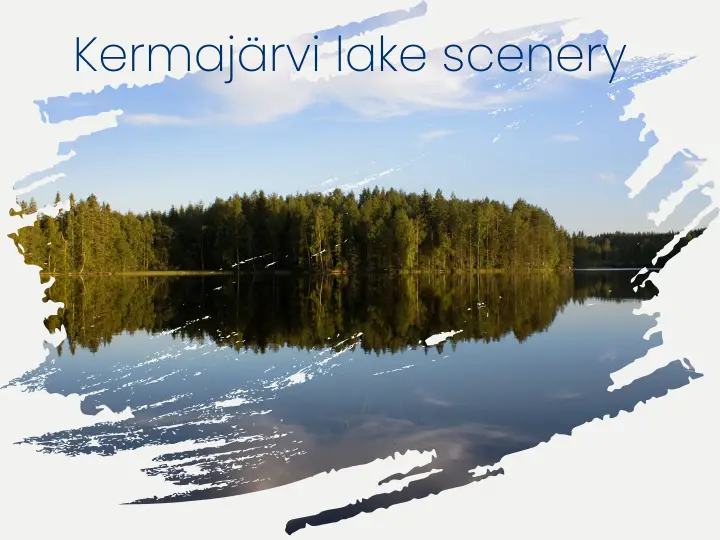
The massive Kermajärvi lake (85.57 km²) forms the heart of an intricate archipelago system where narrow channels wind between countless islands, creating a labyrinth of prime bird habitat.
The area’s position within the Saimaa lake system – Finland’s largest lake complex – places it squarely on major migration routes while also supporting healthy populations of breeding waterfowl, raptors, and forest specialists.
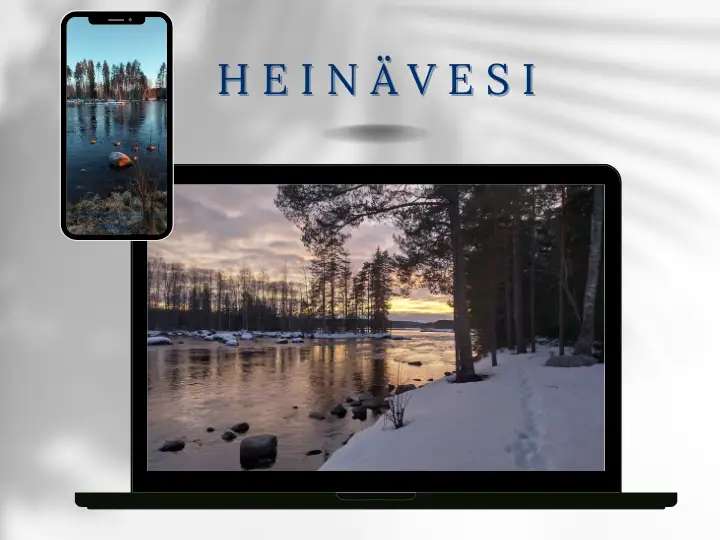
What sets Heinävesi apart is its exceptional habitat diversity packed into a relatively compact area.
Within a single day, you can explore old-growth coniferous forests where rare woodpeckers drum, paddle through reed-fringed channels alive with waders and waterfowl, and scan open waters for loons and diving ducks.
The region’s protected status and low human population density mean that birds here are often remarkably approachable.
The nearby Kolovesi National Park (45 km away) adds another dimension to the area’s birding potential, offering access to some of southern Finland’s last remaining wilderness and the critically endangered Saimaa ringed seal habitat – a unique wildlife viewing opportunity between birding sessions.
Best Times for Birdwatching
Spring Migration (Late April – Early June): Peak birding season. May offers the most spectacular diversity as waterfowl, waders, and passerines flood through the area.
Expect 80-120+ species in a focused week of birding.
Temperatures range from 5-18°C. Ice-out typically occurs in late April, triggering an explosion of bird activity.
Early mornings (4:00-9:00 AM) are most productive, with nearly 20 hours of daylight by late May allowing extended field time.
Breeding Season (June – Mid-July): The archipelago comes alive with nesting activity.
Black-throated Loons call across the waters, Ospreys tend nests on islands and tall pines, and forest specialists are actively feeding young.
This is prime time for observing breeding behaviors and photographing birds in full plumage.
Temperatures 15-25°C make for comfortable birding, though mosquitoes peak in late June and early July.
Autumn Migration (Late August – October): Less spectacular than spring but offering different opportunities.
Waders begin appearing in July, with peak passage in August-September.
Waterfowl numbers build through September and October.
This period is excellent for observing juvenile plumages and mixed flocks.
Temperatures 5-15°C with spectacular autumn colors providing stunning backdrops for photography.
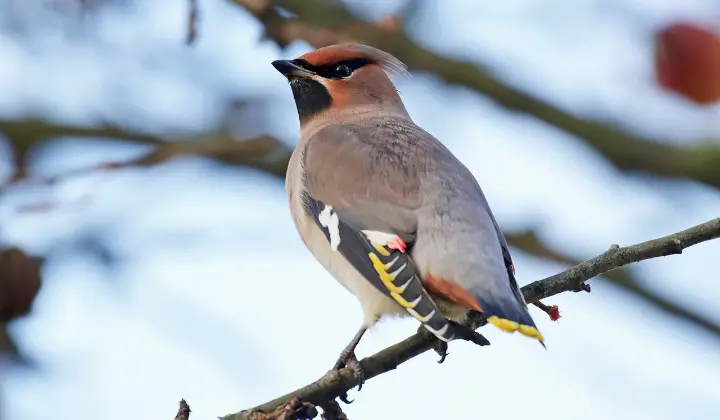
Winter (November – March): Quiet but rewarding for the prepared birder.
The frozen archipelago offers access to areas unreachable in summer.
Forest specialists, winter finches, and hardy waterfowl in ice-free channels.
Possible owl irruptions some years.
Challenging conditions (-10 to -20°C) but potential for rarities and intimate encounters with forest birds around feeders.
Cross-country skiing enables access to remote forest habitats.
Target Birds & Where to Find Them
Signature Species
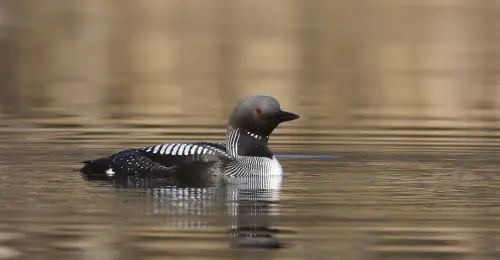
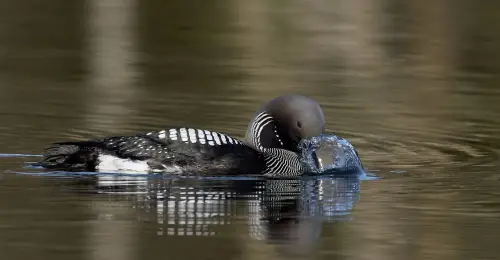
Black-throated Loon (Gavia arctica) Status: Common breeder | Best: May-August | Difficulty: ★☆☆
The haunting, wailing calls of Black-throated Loons epitomize Heinävesi’s archipelago.
These elegant divers nest on islands throughout Kermajärvi, with approximately 15-25 breeding pairs in the immediate area.
Their preference for medium-sized lakes with adequate fish populations and secure nesting islands makes Heinävesi ideal habitat.
Where to find: Early morning and evening on Kermajärvi’s open waters, particularly around larger islands with protected bays.
The Kermaranta marina area offers excellent viewing opportunities. During breeding season, maintain respectful distance from nesting sites. Listen for their extraordinary territorial calls echoing across the water at dawn.
Viewing strategy: Scan open water systematically with binoculars.
Look for low-profile birds diving for extended periods.
In May, displaying pairs perform spectacular synchronized swimming and calling.
From boats or kayaks, you can observe them at closer range, but avoid approaching nests.
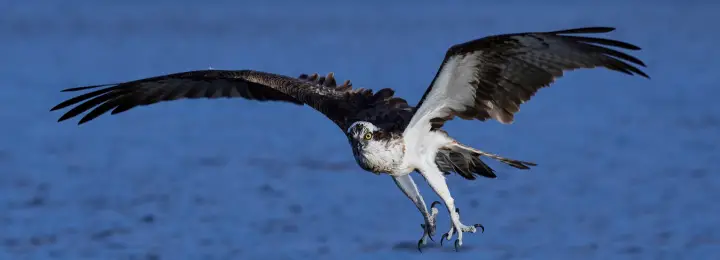
Osprey (Pandion haliaetus) Status: Common breeder | Best: May-September | Difficulty: ★☆☆
Lake Saimaa supports one of northern Europe’s densest Osprey populations, and Heinävesi holds its share of these magnificent fish-hawks.
The archipelago’s clear waters, abundant fish, and tall pines create optimal breeding conditions.
Expect 8-15 active nests within the Heinävesi area.
Where to find: Systematically scan tall pines and dead snags on islands and shorelines for large stick nests.
The waterways between Kermajärvi and Kolovesi National Park are particularly productive.
Ospreys hunt over open water, often hovering before plunging feet-first after fish.
The monasteries’ lakefront areas offer excellent observation points.
Viewing strategy: Visit during morning and evening feeding periods.
Watch for their distinctive crooked-wing flight profile when soaring.
From May through August, you can observe nest-building, courtship feeding, and eventually adults provision young.
Spotting scopes allow detailed nest observation from respectful distances.
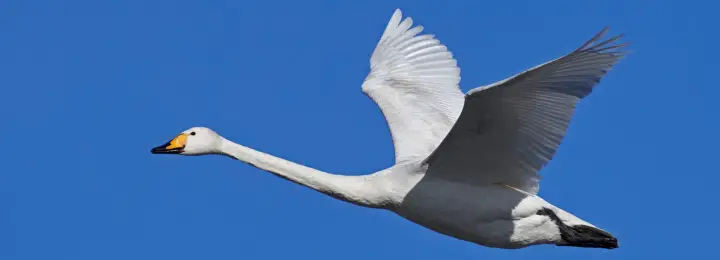
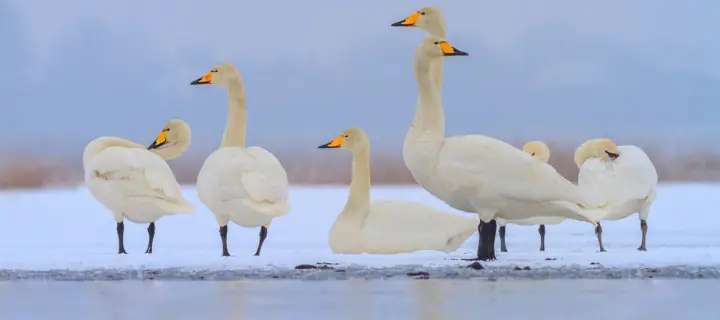
Whooper Swan (Cygnus cygnus) Status: Common breeder & migrant | Best: April-May, September-October | Difficulty: ★☆☆
Finland’s national bird features prominently in Heinävesi’s avifauna.
Spring migration brings flocks of 50-200+ birds staging on ice-free waters, while 10-20 pairs nest in the region’s quieter bays and marshes.
Where to find: During migration, concentrate on larger open water areas and recently ice-free bays.
Breeding pairs prefer secluded marshes and reed-fringed bays along Kermajärvi’s shoreline. The wetlands near the Karvio Canal often hold breeding pairs.
Listen for their bugling calls – often heard before birds are seen.
Photography opportunity: Backlit swans on misty morning waters create iconic Finnish imagery.
May offers families with cygnets, providing touching behavioral photography opportunities.
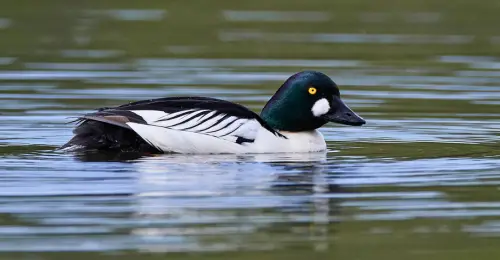
Common Goldeneye (Bucephala clangula) Status: Abundant breeder | Best: April-July | Difficulty: ★☆☆
One of Heinävesi’s most characteristic waterbirds, with their distinctive whistling wingbeats audible from considerable distances.
The archipelago’s old forests provide abundant nest cavities, supporting high breeding densities.
Where to find: Omnipresent on Kermajärvi throughout the breeding season.
Particularly common near forested shorelines with mature trees.
Females escort ducklings through narrow channels between islands from June onward.
Spring courtship displays (April-early May) involve males throwing their heads back dramatically while producing squeaky calls.
Identification focus: Learn to distinguish from similar species like Common Merganser and Smew.
The males’ golden eyes, distinctive head shape, and black-and-white plumage are diagnostic.
Practice identifying females, which birders often overlook despite their elegant plumage.
Forest Specialists

Three-toed Woodpecker (Picoides tridactylus) Status: Uncommon resident | Best: March-June | Difficulty: ★★★
One of the most sought-after birds in Heinävesi’s old-growth forests.
These specialist woodpeckers require extensive dead and dying trees, making them indicators of forest health.
The region’s protected forests harbor small populations.
Where to find: Focus birding efforts on mature coniferous forests with abundant deadwood, particularly around Kolovesi National Park and in the forested sections near Valamo Monastery.
Listen for their distinctive drumming – slower and less resonant than Great Spotted Woodpecker.
Look for bark flaking off dead spruces and pines – a telltale sign of feeding activity.
Best approach: Early morning visits to suitable habitat, moving slowly and listening intently.
May-June offers the best chances as birds are vocal during breeding.
Their habit of stripping bark from dead conifers creates distinctive “peeled” trunks that indicate presence in an area.
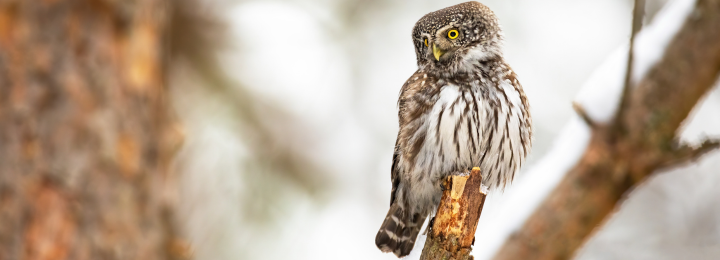
Eurasian Pygmy Owl (Glaucium passerinum) Status: Rare resident | Best: March-April, August-October | Difficulty: ★★★
Europe’s smallest owl inhabits Heinävesi’s dense conifer forests.
Though resident year-round, these diminutive predators are easiest to locate during spring territorial calling and autumn when young disperse.
Where to find: Dense spruce forests with open understory, particularly near the monastery grounds and in Kolovesi’s forests.
Listen for their distinctive, flute-like whistling calls at dawn and dusk.
They often perch conspicuously when calling but quickly disappear when approached.
Look for whitewash below favorite perches and listen for mobbing songbirds, which often reveal owl locations.
Calling season: March-April offers the best chance, with males calling to establish territories and attract mates.
The long twilight periods of spring and autumn provide extended opportunities for locating this crepuscular species.
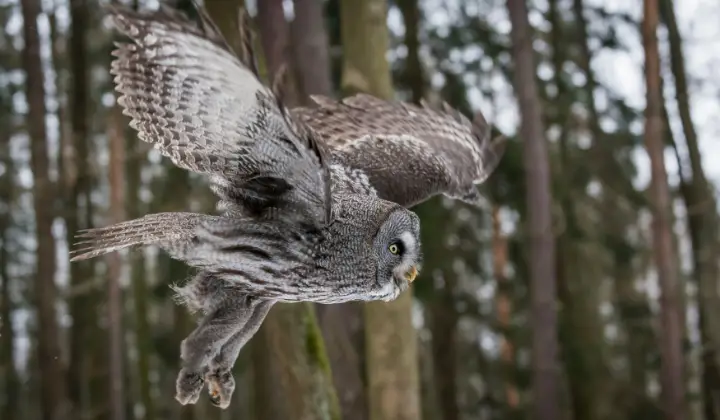
Great Grey Owl (Strix nebulosa) & Ural Owl (Strix uralensis) Status: Rare residents | Best: March-May | Difficulty: ★★★
These impressive owls inhabit forests around Heinävesi, though encounters are never guaranteed.
Both species require old-growth or mature mixed forests with open understory for hunting.
Where to find: Most reliably seen during early spring (March-April) when calling and hunting to provision mates.
The forests surrounding Kolovesi National Park and extensive forest tracts between Heinävesi and nearby wilderness areas hold small populations.
Local birding guides maintain knowledge of active territories (contact information in Practical Information section).
Viewing strategy: Dawn and dusk visits to suitable habitat. Listen for deep hooting calls (Ural) or booming hoots (Great Grey).
Consider hiring a local guide who knows current territories – essential for reliable views of these elusive species.

Wetland & Waterbird Specialists
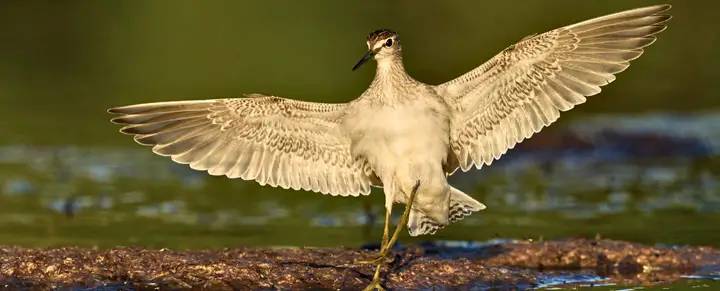
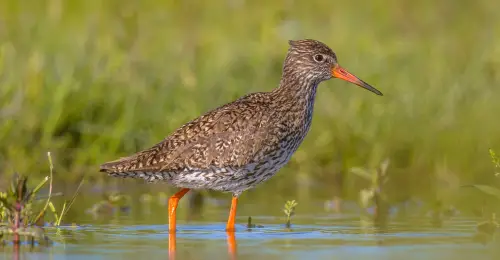
Wood Sandpiper (Tringa glareola) Status: Common breeder | Best: May-July | Difficulty: ★☆☆
The most abundant breeding wader in Heinävesi’s wetlands and forest bogs.
Their melodious calls and display flights are quintessential sounds of the Finnish breeding season.
Where to find: Any wetland, marsh, or forest bog with shallow water and muddy margins.
The wetlands near Karvio Canal, flooded meadows along Kermajärvi’s quieter bays, and forest pools throughout the region.
From late April through May, displaying males perform aerial song flights – a delightful spectacle.
Migration spectacle: Late July through September brings concentrations at muddy edges and shallow bays as adults and juveniles stage before migration.
Single days can produce 20-50+ individuals.
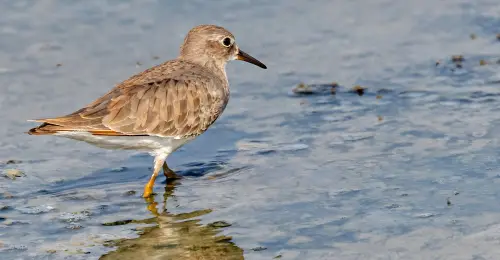
Temminck’s Stint (Calidris temminckii) Status: Uncommon breeder & passage migrant | Best: May-June, July-August | Difficulty: ★★☆
This tiny wader breeds sparingly in suitable habitat around Heinävesi.
Migration brings higher numbers through shallow bays and muddy shorelines.
Where to find: Breeding birds favor stony or gravelly edges of forest pools and quiet lake margins.
During migration, concentrate on muddy shores, particularly where streams enter Kermajärvi.
Often associated with Wood Sandpipers but distinguishable by smaller size, yellowish legs, and distinctive calls.
Identification challenge: Practice separating from the similar Little Stint (rare vagrant).
Temminck’s shows more uniform upperparts, yellowish (not black) legs, and favors freshwater over coastal habitats.
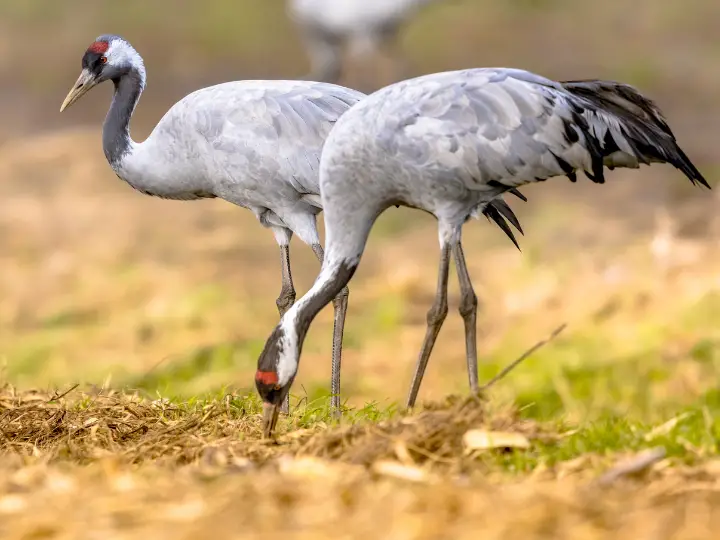
Common Crane (Grus grus) Status: Regular migrant, occasional breeder | Best: April-May, September | Difficulty: ★★☆
Spectacular flocks pass through Heinävesi during migration, with occasional pairs nesting in the region’s most secluded wetlands.
Their trumpeting calls carry for kilometers.
Where to find: During migration, watch for V-formations high overhead, often heard before seen.
Staging birds favor wet meadows and shallow marshes, particularly early morning and evening.
The wetlands around Karvio Canal and larger marshy bays along Kermajärvi hold resting flocks.
Prime time: Late April through mid-May for spring passage. September for autumn movement.
Peak days can see flocks of 50-200+ birds.
Their dawn chorus at roosting sites is unforgettable – arrange early starts to witness this spectacle.

Additional Notable Species
Regular Breeders:
- Eurasian Teal, Mallard, Common Pochard, Tufted Duck
- Common Merganser, Red-breasted Merganser, Smew (uncommon)
- Great Crested Grebe, Horned Grebe, Red-necked Grebe
- Common Tern, Black-headed Gull
- European Honey Buzzard, Common Buzzard
- Black Woodpecker, Great Spotted Woodpecker, Grey-headed Woodpecker
- Willow Warbler, Chiffchaff, Wood Warbler, Greenish Warbler
- Red-breasted Flycatcher, Spotted Flycatcher
- Brambling, Crossbills (Common and possible Parrot)
Possible with Effort:
- White-backed Woodpecker (very rare, old-growth forests)
- Hazel Grouse, Black Grouse, Capercaillie (forest clearings and bogs)
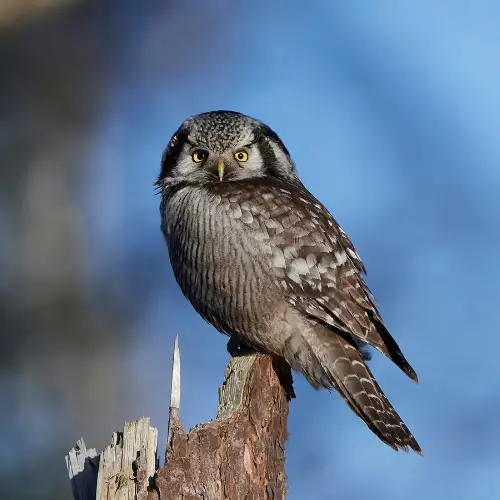
- Northern Hawk-Owl, Boreal (Tengmalm’s) Owl
- Red-flanked Bluetail (rare, eastern forests)
- Rustic Bunting, Little Bunting (rare breeders)
Prime Birdwatching Locations
Kermajärvi Lake & Archipelago
Accessibility: ★★★ | Diversity: ★★★ | Uniqueness: ★★★
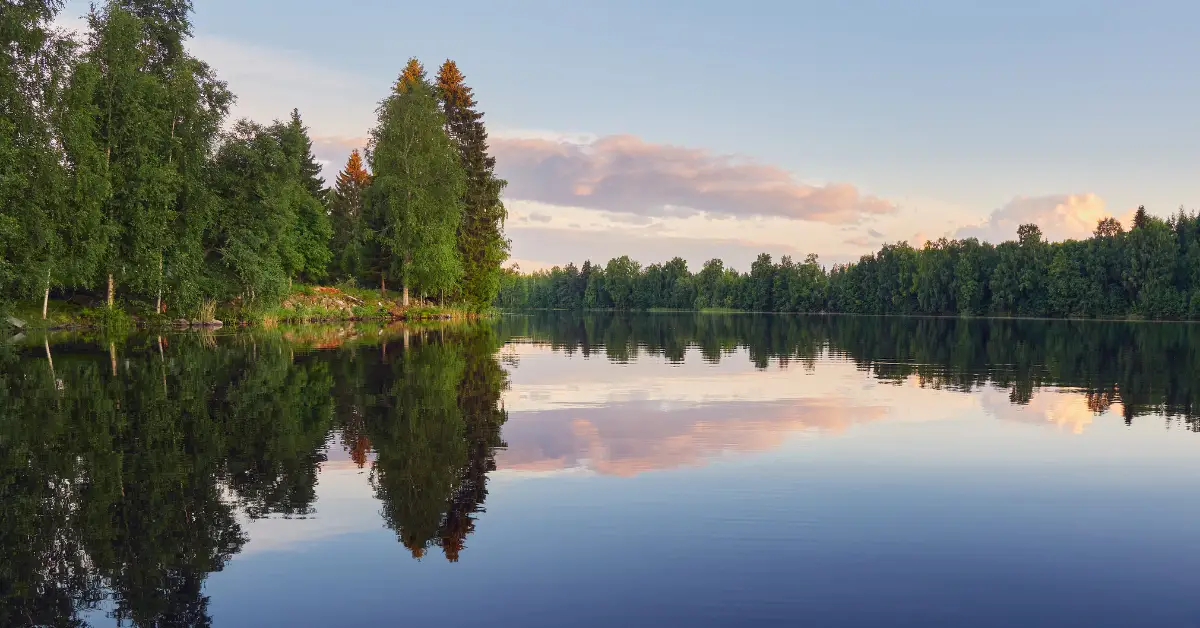
The sprawling Kermajärvi system forms Heinävesi’s birding heart. Its 85+ km² of water dotted with countless islands create a mosaic of habitats supporting exceptional diversity.
The varying water depths, clear waters (excellent for diving ducks and loons), and protected bays offer everything from open-water species to skulking wetland birds.
Access points:
- Kermaranta Marina (Kermarannantie, 58800 Heinävesi): Free parking, launching for kayaks/boats, interpretive signs. Starting point for the famous Heinävesi Seal Trail.
- Valamo Monastery shoreline (Valamontie 42, 79850 Uusi-Valamo): Limited parking, shoreline access, monastery grounds birding. Often productive for forest-edge species.
- Multiple small roads and forest tracks around the lake perimeter – study maps carefully and respect private property.
Target species: Black-throated Loon, Red-throated Loon (passage), all three grebes, Osprey, Whooper Swan, full range of waterfowl including Smew, Common Tern, various waders along margins.
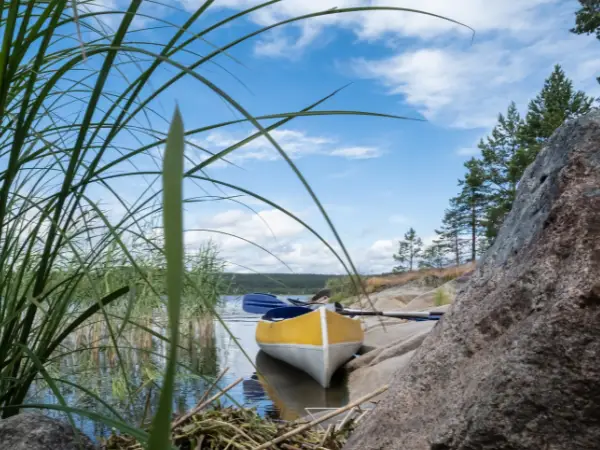
Birding strategy: Early morning kayak/boat trips yield the highest diversity.
Paddle quietly through narrow channels between islands, pausing frequently to scan and listen.
The hour after dawn is magical, with loon calls echoing across mist-shrouded waters.
Pack waterproof gear for your optics, and bring both binoculars and a scope if possible.
Afternoon land-based birding from access points complements morning water work.
Best months: May for peak diversity, June for breeding activity, August-September for staging waders and waterfowl.
Kolovesi National Park
Distance: 45 km | Accessibility: ★★☆ | Diversity: ★★★ | Uniqueness: ★★★
This 23 km² national park protects some of Finland’s most pristine archipelago wilderness.
The complete absence of motor boats creates an acoustic environment where bird calls carry clearly – a rare treat in modern birding.
Ancient rock paintings and dramatic cliffs add cultural and scenic dimensions.
Access: Park entrance at Kirkkorannantie 200, 58180 Enonkoski.
Parking available. Multiple hiking trails (Nahkiaissalo 3.3 km, Mäntysalo 3.8 km) and water routes. No entrance fee.

Target species: Saimaa Ringed Seal (unique wildlife viewing), Black-throated Loon, Osprey, Three-toed Woodpecker, White-backed Woodpecker (very rare), Greenish Warbler, Wood Warbler, Red-breasted Flycatcher, Wryneck, Eurasian Eagle-owl, Great Grey Owl (rare).
Birding strategy: Combine hiking and paddling for maximum coverage.
The Nahkiaissalo trail penetrates old-growth forest with good woodpecker potential.
Early morning and evening paddles through the narrow channels often produce excellent raptor viewing as Ospreys hunt and European Honey Buzzards soar overhead.
The park’s clear waters and protected status mean remarkable wildlife habituation – Ospreys sometimes fish within 20 meters of quiet kayakers.
Best months: June for forest specialists, May and September for broader diversity.
Karvio Canal & Wetland Complex
Accessibility: ★★★ | Diversity: ★★☆ | Uniqueness: ★★☆
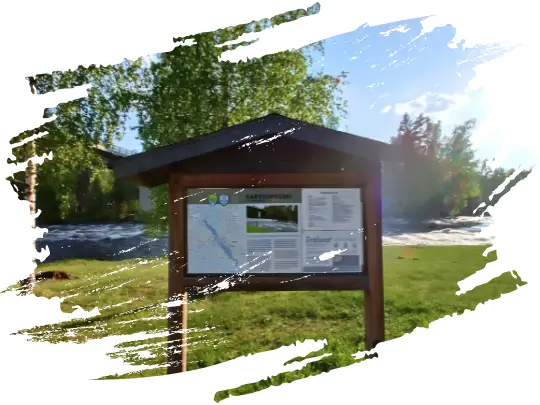
Finland’s only four-gate canal offers more than engineering interest.
The surrounding wetlands, flooded meadows, and marshy bays attract excellent wetland birds.
The open habitats contrast nicely with the forested archipelago, adding different species to day lists.
Access: Easy roadside access, parking near canal (Route 476), viewing platforms, generally flat terrain suitable for all mobility levels.
Target species: Wood Sandpiper, Temminck’s Stint, Common Snipe, Whooper Swan (breeding), Common Crane (passage and possible breeding), full range of dabbling ducks, Common Coot, various herons (Grey Heron, possible Bittern), marsh warblers and buntings, Common Rosefinch.
Birding strategy: Walk the canal edges slowly, scanning muddy margins carefully for waders.
May mornings bring displaying Wood Sandpipers and drumming snipes. The surrounding wet meadows repay careful searching for skulking species.
Bring a scope for scanning distant shores and mud flats. Evening visits can be productive as waterfowl become more active.
Best months: May for breeding activity, July-September for migrant waders.
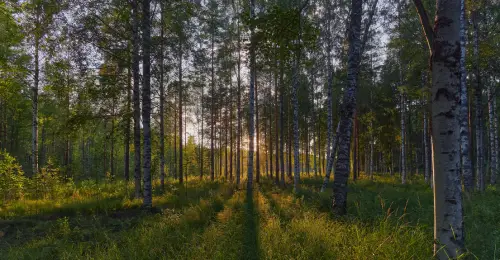
Valamo Monastery Grounds
Accessibility: ★★★ | Diversity: ★★☆ | Uniqueness: ★★☆
The monastery’s extensive grounds combine manicured gardens, forest edges, agricultural land, and lakeshore – an excellent habitat mosaic.
The peaceful atmosphere and public accessibility make this a pleasant introduction to Heinävesi birding.
Access: Valamontie 42, 79850 Uusi-Valamo. Free parking, trails throughout grounds, respectful visitors welcome.
Combine birding with monastery visits and dining.
Target species: Garden and edge species including various thrushes, warblers, flycatchers. Forest edges attract woodpeckers. Shoreline access for waterfowl.
European Honey Buzzard, Common Buzzard overhead. Possible Eurasian Pygmy Owl in denser forest patches.
Winter feeding stations attract finches, tits, and occasional rarities.
Birding strategy: Early morning circuits of the grounds before crowds arrive.
The garden areas can be surprisingly productive for passerine migrants in May. Forest trails penetrate suitable habitat for woodpeckers – move slowly and listen carefully.
Lake access points offer waterfowl viewing.
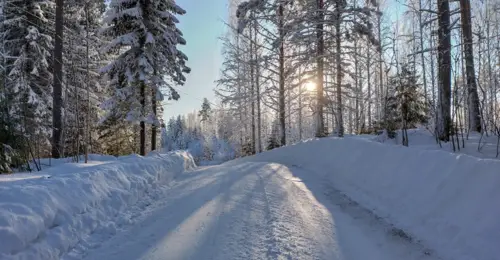
Forest Roads & Tracks
Accessibility: ★★☆ | Diversity: ★★☆ | Uniqueness: ★★★
The extensive forest road network around Heinävesi opens access to vast tracts of coniferous and mixed forest.
These are your best chances for game birds, owls, and forest specialists that rarely venture into open areas.
Finding spots: Study topographic maps (available at tourist information).
Forest roads radiating from main routes often penetrate prime habitat.
The forests between Heinävesi and Kolovesi hold excellent potential.
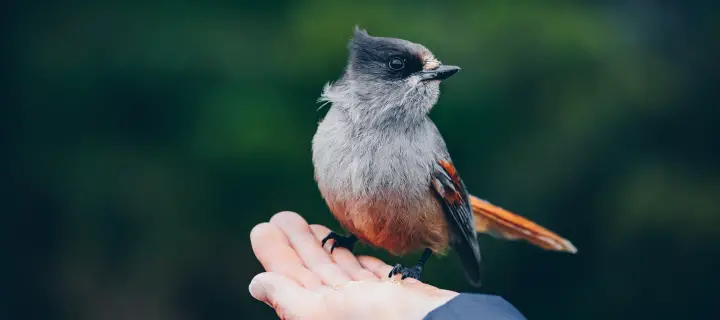
Target species: Capercaillie (forest clearings at dawn), Black Grouse (forest edges and clearings), Hazel Grouse (dense undergrowth), owls (Great Grey, Ural, Pygmy), woodpeckers (Black, Three-toed), Siberian Jay (rare, northern forests), various crossbills, Brambling, forest warblers.
Birding strategy: Dawn visits essential for game birds.
Drive slowly, stopping frequently to listen. Scan recently logged areas for Black Grouse and forest openings for Capercaillie.
The hours around dawn in April-May offer the best game bird encounters.
For owls, dusk and dawn are prime, with March-April being peak calling season.
Woodpeckers are most vocal March-June – territorial drumming carries well through quiet forests.
Safety note: Inform someone of your plans when exploring remote forest tracks. Carry charged phone, though service can be spotty.
Respect forestry operations and private land.
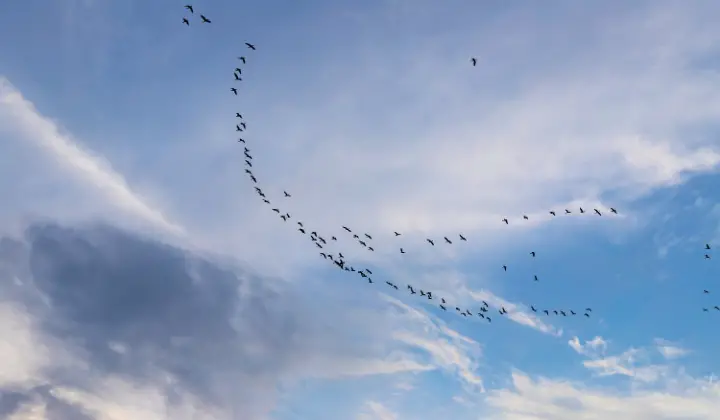
Migration Hotspots
Shoreline Watch Points During peak migration (late April-May, September-October), certain shoreline promontories concentrate migrants.
Scan for high-flying flocks of geese, swans, cranes, and raptors.
Wader passage along shorelines peaks July-September.
Prime dates: May 5-25 for spring waterbirds, September 10-October 5 for autumn waterfowl and wader passage.
Guided Birding & Local Expertise
Recommended Guides & Services
Finnature (www.finnature.fi) – Professional birding tour company with 30+ years’ experience.
Offer custom day trips and multi-day tours in the Heinävesi region.
Guides possess intimate knowledge of local owls, woodpeckers, and game birds.
Booking essential, especially March-June. Contact: [email protected], +358 13 687 299.
Local Birders Network – Contact Oriolus Association of Southern Savo (www.oriolus.fi) for connections with local birdwatchers who may offer informal guiding or site information.
BirdLife Finland (www.birdlife.fi) can provide regional contacts.
Self-Guided Options – The region is perfectly suited for independent birders with good field skills.
eBird hotspots provide valuable recent sightings information (search “Heinävesi” and “Kolovesi”).
The Finnish Biodiversity Information Facility (laji.fi) offers comprehensive species distribution data.
Birding Ethics & Best Practices
Nesting birds: Maintain minimum 50-meter distance from active nests. Never flush birds from nests for photography.
Rare species: Exercise extreme caution around owls, game birds, and other sensitive species. Never use playback near possible nesting areas.
Motor boat restrictions: Respect Kolovesi National Park’s motorboat ban and similar restrictions in other protected waters.
Winter restrictions: Some areas of Kolovesi are closed January-April to protect Saimaa Ringed Seal breeding. Respect all closures.
Everyman’s Right: Finland’s Jokamiehenoikeus allows responsible access to most forests and waters, but respect private property, don’t disturb, and leave no trace.
eBird contributions: Share your sightings to help build knowledge of the area’s avifauna. Submit observations to eBird.org.
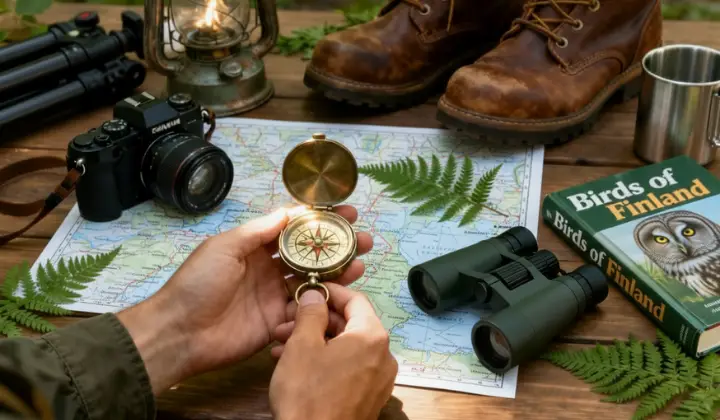
Equipment Recommendations
Optics:
Binoculars: 8×42 or 10×42 essential. The vast waters and forest birding require good light-gathering.
Spotting scope: Highly recommended, especially for waterfowl identification on large open waters. 20-60x zoom adequate.
Tripod: Valuable for scope work from boats/shore and for extended forest birding sessions.
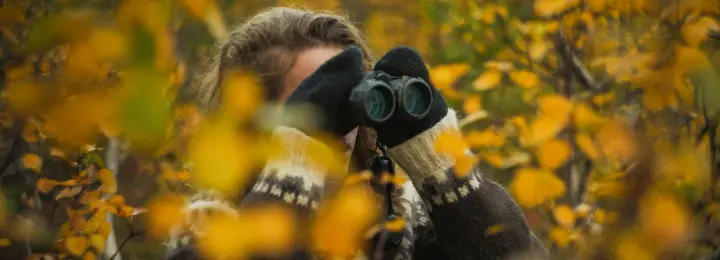
Clothing:
Layering system: Essential year-round. May-June: base layer, fleece, waterproof shell.
March-April and September-October: add insulation layer.
Rain gear: Quality waterproofs non-negotiable.
Extended periods on water mean constant exposure.
Footwear: Waterproof boots essential. Trails can be muddy May-June.
Winter: insulated boots rated -20°C minimum.
Insect protection: Late June-July requires head nets and insect-proof clothing. Mosquitoes can be intense.
Field Guides & References

“Birds of Europe” (Lars Svensson et al.) – The definitive European field guide
“Crossbill Guide: Finnish Lapland” – Excellent site information and species accounts
Sound recordings: Crucial for locating owls and skulking species. Several good apps available.
Technology

Smartphone: eBird app, field guide apps, weather monitoring, and photography backup
GPS/Map: Essential for forest road exploration.
Download offline maps.
Camera: Long lens (400mm+) for photographing distant waterfowl and forest species
Power bank: Extended daylight enables long field days, draining batteries quickly
Practical Birding Information
Getting There

By car: 320 km from Helsinki (4 hours), 80 km from Kuopio (1.5 hours), 65 km from Joensuu (1 hour).
Route 23 and 476 provide main access. Car rental essential for reaching prime sites.
Public transport: Bus service from Kuopio and Joensuu, but limited access to best birding areas without vehicle.
Airport access: Nearest airports Kuopio (KUO) and Joensuu (JOE), both with limited service.
Helsinki-Vantaa (HEL) offers most connections.
Accommodation for Birders
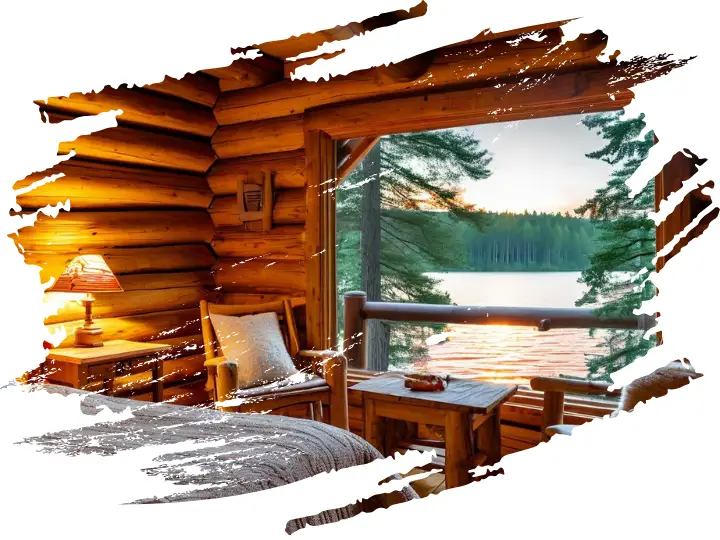
Villa Kermajärvi (€180-250/night) – Lakefront location ideal for dawn departures.
Private dock for boat launching. Contact: booking@villakermajärvi.fi
Valamo Monastery Guesthouse (€60-220/night) – Various room options.
Prime location for monastery grounds birding.
Excellent on-site dining. Book well ahead May-August. Contact: [email protected], +358 17 570 111
Lakeside Cottages Kermajärvi (€100-140/night) – Self-catering with boats included.
Perfect for multi-day birding trips. Contact: cottages@kermajärvi.fi
Camping Kermajärvi (€25-40/night) – Budget option with good facilities.
Birders welcome from 4:00 AM for dawn departures. Open May-September.
Birder-Friendly
Dining
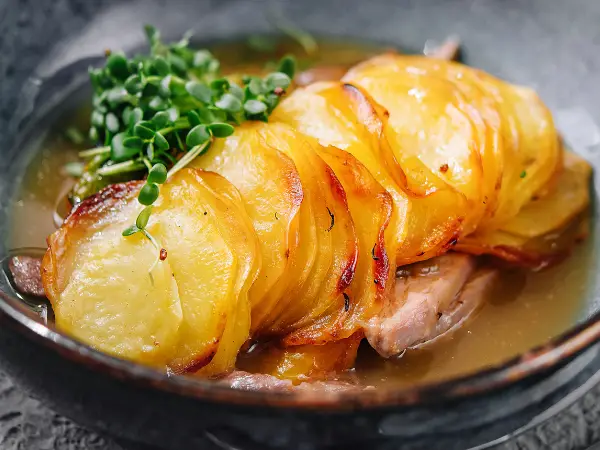
Most accommodation includes kitchen facilities for early starts. For dining:
Monastery Restaurant Trapesa Orthodox monastery dining | €35-50/meal | Lunch and dinner
This unique restaurant serves traditional Orthodox fasting dishes alongside Finnish classics, using ingredients from the monastery’s own gardens.
The setting in a historic monastery building adds spiritual ambiance to every meal.
Hours: Daily 11:00-20:00 (summer), 12:00-18:00 (winter) Specialties: Orthodox fasting menu, monastery wines, fresh fish
Pack picnic lunches: Essential for full-day field trips. Stock up in Heinävesi village.
Weather & Field Conditions
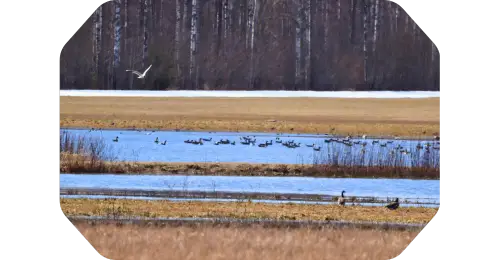
Spring (April-May): Highly variable. Snowmelt can cause flooding in wetlands (excellent for waders).
Ice-out dates affect waterfowl arrival – monitor conditions.
Temperatures 0-18°C, though cold snaps possible through mid-May.
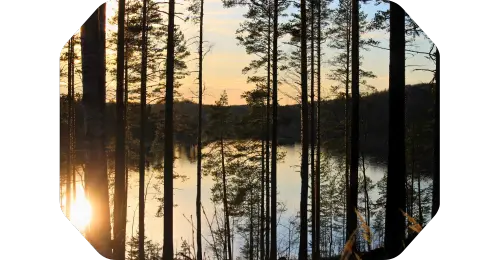
Summer (June-August): Generally pleasant but mosquito-intense June-July.
Thunderstorms possible, requiring portable shelter.
Long daylight enables 4:00 AM-22:00 PM birding if you’re ambitious.
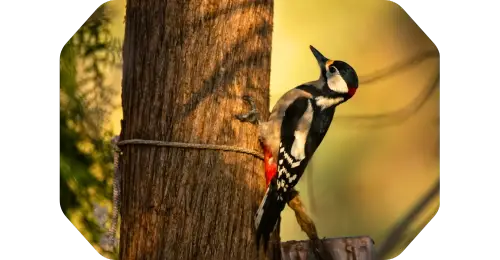
Autumn (September-October): Increasingly wet and cool.
Fog common (atmospheric but limiting visibility).
Prepare for temperatures near 0°C by late October.
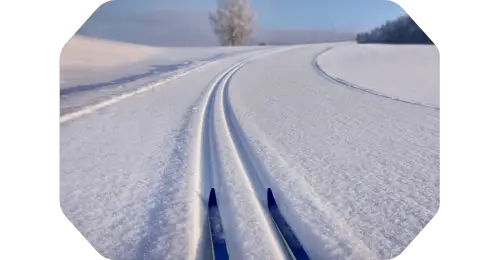
Winter (November-March): Serious preparation required. Daylight limited (6-7 hours in December-January).
Temperatures regularly -10 to -25°C. Some roads unplowed; confirm access.
The rewards of winter birding (owls, finches, pristine landscapes) compensate for the challenges.
Special Considerations
Breeding season quiet zones: While not officially designated, experienced birders naturally minimize disturbance during nesting.
Focus on observation from distance; use blinds/vehicles as natural concealment when possible.
Water safety: Life jackets mandatory when kayaking/boating.
Weather can change rapidly on large water bodies. Know your limits.
Solo birding: The region is safe, but remote forest tracks see little traffic.
Carry emergency supplies, inform others of plans, keep phone charged.
Photography permits: No special permits required for bird photography except in restricted areas.
Commercial photography may require permissions – check with park authorities.
Language

Finnish and Swedish are official languages. English is widely spoken at accommodations and tourism facilities, though less so in rural areas.
Learning basic Finnish bird names facilitates communication with local birders:
- Kuikka = Loon
- Laulujoutsen = Whooper Swan
- Sääksi = Osprey
- Tikka = Woodpecker
- Korppi = Raven
Connectivity

Mobile coverage generally good in populated areas, spotty in remote forests.
Major operators: DNA, Elisa, Telia. Consider local SIM if planning extended visit.
WiFi available at accommodations and monastery.
For Your Travel Companions Beyond Birding
While you’re pursuing rare woodpeckers and scanning for loons, your non-birding companions can explore Heinävesi’s unique cultural and natural attractions.
The region offers surprising depth for those less focused on feathered residents.
Must-SeeCultural Sites
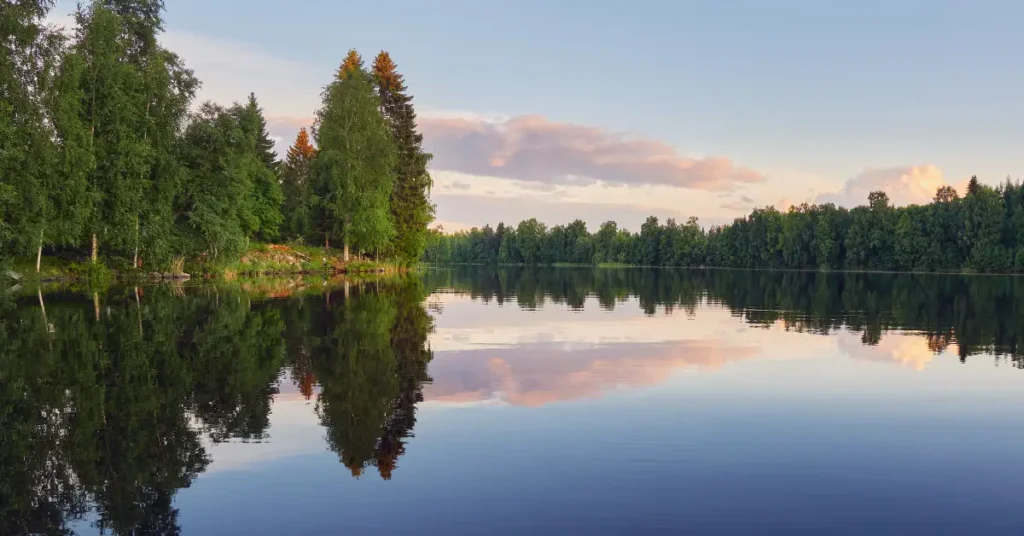
Valamo Monastery: Living Tradition
Finland’s only Orthodox monastery offers a window into spiritual life rarely glimpsed in Nordic countries.
The community of monks relocated here in 1940 from Russian Karelia, bringing centuries-old traditions.
The stunning architecture, priceless icon collection, and serene atmosphere provide contemplative experiences far removed from typical tourist sites.
Open daily, guided tours available, monastery shop sells handcrafted items and locally produced wines. Allow 2-3 hours.
Lintula Holy Trinity Convent
Sister monastery to Valamo, located 14 km away.
The nunnery maintains beautiful gardens and produces distinctive handicrafts.
The peaceful setting offers reflection and insight into Orthodox monastic life.
Open daily for visitors, café serves simple refreshments, gift shop.
Karvio Canal: Engineering Marvel
Finland’s only four-gate canal demonstrates 19th-century engineering.
Watching boats navigate the locks provides a glimpse into the waterway’s history as a vital transport link.
Free access, small fee for private boats transiting, picnic areas nearby.
Outdoor Activities
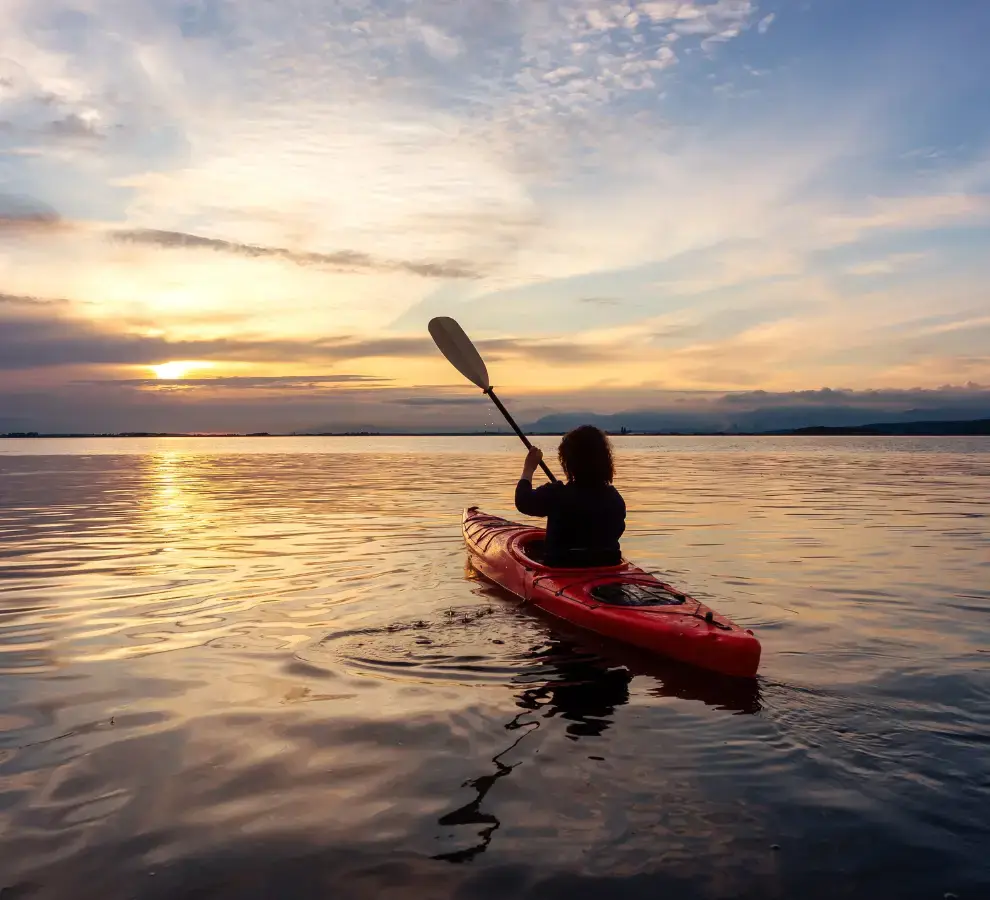
Kayaking & Canoeing The archipelago’s calm waters suit all skill levels.
Rentals available at Kermaranta Marina and other points.
Popular routes include the famous Heinävesi Seal Trail (66-100 km multi-day option) or shorter island-hopping explorations. Rentals €20-35/day.
Hiking Trails Multiple marked trails around Kermajärvi and in Kolovesi National Park.
The Nahkiaissalo trail (3.3 km) and Mäntysalo trail (3.8 km) showcase the region’s natural beauty without requiring birding-level dawn starts.
Free access, maps available at trail heads.
Swimming Lake Kermajärvi’s clear waters warm to comfortable swimming temperatures June-August.
Numerous beaches and swimming spots around the archipelago, including facilities near accommodations.
Fishing Excellent opportunities for pike, perch, and vendace. Required fishing permits available locally and online (www.fishing.fi). Permits from €10/day.
Relaxation & Wellness

Traditional Finnish Sauna Most accommodations include sauna access.
The Finnish sauna experience – hot steam, cool lake swims, peaceful recovery – is culturally essential.
Evening sauna sessions provide perfect endings to active days.
Forest Bathing The Japanese practice of Shinrin-yoku finds natural expression in Finland’s pristine forests.
Quiet walks through pine-scented woods offer meditative experiences and proven health benefits.
Local Culture & Crafts
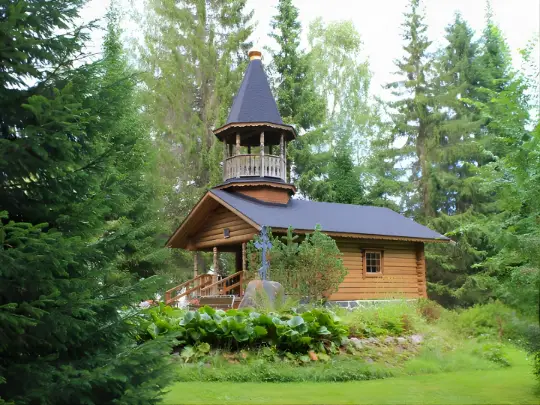
Monastery Products Both monasteries produce and sell unique items rarely found elsewhere: icon paintings, ecclesiastical items, organic herbs, distinctive wines, textiles.
These make meaningful souvenirs and gifts.
Traditional Crafts Local artisans maintain traditional Finnish crafts. Look for wood carvings, textiles, and ceramics at the monastery shops and small galleries in Heinävesi village.

Heinävesi Wooden Church: Architectural Gem
Open June-August | Services Sundays | Free entry
This traditional wooden church represents classic Finnish ecclesiastical architecture at its finest.
While smaller than its Orthodox neighbors, it offers insight into Lutheran traditions and features beautiful woodwork that’s been lovingly maintained for generations.

Karvio Canal: Engineering Marvel
Open May-September | €5 canal passage for private boats
Finland’s only canal with 4 gates, the Karvio Canal is a minor but fascinating attraction that allows boats to navigate between different water levels.
Watching the lock system in action feels like stepping back in time, and the surrounding area offers excellent picnicking spots.

Härkämäki Observatory: Stargazer’s Paradise
Open by arrangement | €15 adults, €8 children | Located in nearby Kangaslampi
Situated 160 meters above sea level in completely light pollution-free skies, this observatory offers some of Finland’s best stargazing opportunities.
During summer’s white nights, they focus on solar observation, while winter visits can combine aurora watching with deep-sky astronomy.
Planning Tip: Book in advance during aurora season (September-March) and bring warm clothing even in summer – nights can be surprisingly cool.
Outdoor Adventures: From Gentle Strolls to Epic Expeditions
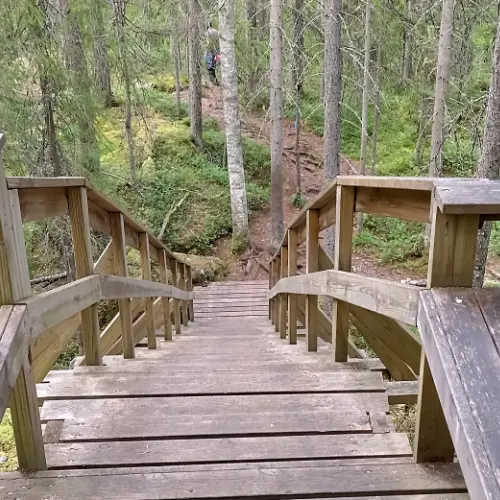
Hiking Trails: Forest Therapy at Its Best
Valamo Nature Trail (3 km, Easy) Difficulty: ★☆☆ | Duration: 1-1.5 hours | Year-round
This gentle loop around the monastery grounds combines spiritual and natural beauty.
Well-maintained boardwalks protect sensitive areas while providing excellent views of Lake Juojärvi. Perfect for families and anyone seeking a contemplative walk.
Kermajärvi Lake Circuit (12 km, Moderate) Difficulty: ★★☆ | Duration: 4-5 hours | April-October
A more challenging hike that offers spectacular lake views and diverse terrain.
The trail includes several rest points with fire pits, making it perfect for a picnic lunch. Wildlife sightings are common, especially early morning or evening.
Orinoro Nature Trail, Leppävirta (5 km, Easy) Difficulty: ★☆☆ | Duration: 2 hours | Year-round
Located in the neighboring region, this trail features unique geological formations and offers excellent birdwatching opportunities.
The trail is well-marked and includes informational boards about local ecology.
Cycling: Pedal Through Paradise

Heinävesi to Koli National Park (85 km, Challenging) Difficulty: ★★★ | Duration: Full day | May-September
This epic ride takes you from Heinävesi’s archipelago to Koli’s famous hilltop views.
The route follows quiet country roads through traditional Finnish countryside, with several charming villages offering rest stops.
Reward yourself with Koli’s legendary views and sauna at the end.
Monastery Circle Route (25 km, Easy-Moderate) Difficulty: ★★☆ | Duration: 3-4 hours | May-October
A scenic circuit connecting both monasteries with several viewpoints and swimming spots.
The route is mostly flat with some gentle hills, perfect for electric bikes if you prefer easier pedaling.
Heinävesi to Savonlinna (78 km, Moderate) Difficulty: ★★☆ | Duration: 6-7 hours | May-September
Follow part of the historic King’s Road through forests and lakeside meadows.
The route passes through Ennonkoski village, where you can grab traditional Finnish coffee and cardamom buns.
End your journey at Savonlinna’s magnificent Olavinlinna castle.
Water Adventures: Paddle Your Way to Bliss
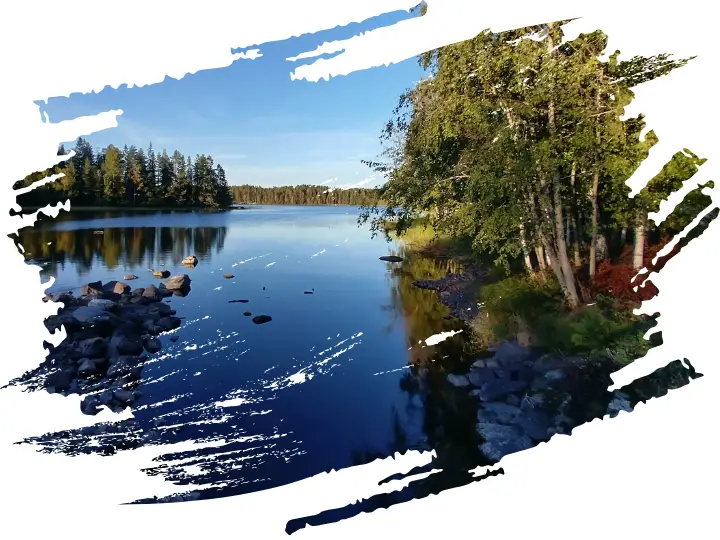
Kermajärvi Lake Kayaking Difficulty: ★☆☆ | Best: June-September
The massive Kermajärvi lake offers endless paddling opportunities through protected waters perfect for beginners.
Multiple islands provide perfect lunch stops, and the clear water offers glimpses of fish swimming below.
Rental Options:
- Heinävesi Adventures: Single kayaks €25/day, doubles €35/day, includes safety equipment
- Monastery Marina: Basic rental €20/day, guided tours €45/person (3 hours)
Archipelago Island Hopping Difficulty: ★★☆ | Best: July-August
More experienced paddlers can explore the complex archipelago system, discovering hidden coves and uninhabited islands.
Some islands have designated camping spots, making multi-day adventures possible.
Canal Cruises Duration: 2-4 hours | €25-45 adults | June-August
For those preferring powered vessels, several operators offer guided cruises through the canal system.
These trips often include monastery visits and traditional Finnish coffee service aboard.
Winter Activities: Embrace the Cold
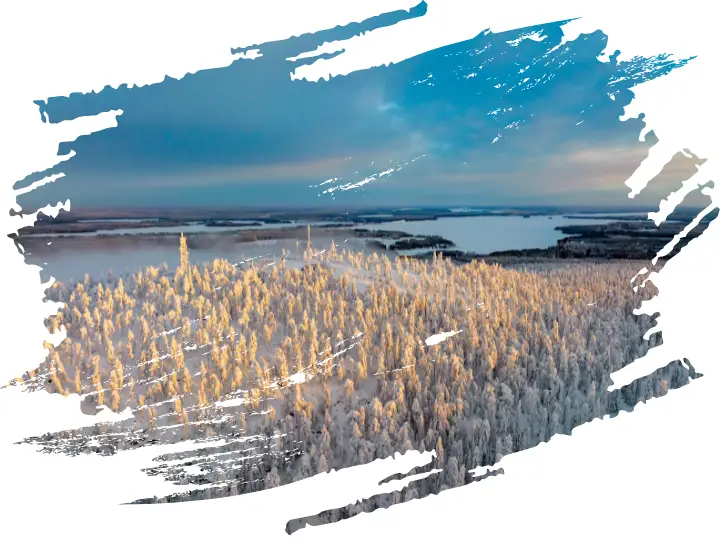
Pääskyvuori Ski Resort December-March | Day passes €35 adults, €25 children
This charming family-friendly ski resort offers 8 slopes ranging from beginner to intermediate, plus well-maintained cross-country trails.
The resort features ski school, equipment rental, and a cozy café with warming drinks and traditional Finnish fare.
Cross-Country Skiing The region maintains over 50 kilometers of groomed trails connecting villages, monasteries, and scenic viewpoints.
Trail maps available at tourist information points and most accommodations.
Birdwatching: Feathered Residents and Visitors
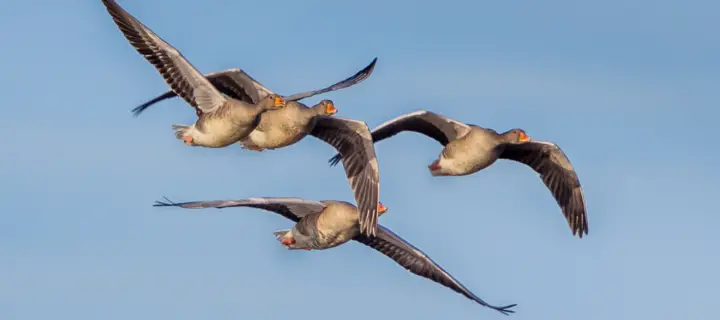
Heinävesi’s diverse habitats support over 150 bird species.
Spring migration (April-May) brings spectacular numbers, while summer offers excellent breeding bird watching.
Best Spots:
- Monastery gardens: Common birds plus occasional rarities
- Kermajärvi shorelines: Waterfowl and waders
- Forest trails: Woodland species including capercaillie
- Agricultural areas: Open country species
Prime Time: Early morning (5-9 AM) and evening (6-9 PM) during May-July
Foraging Adventures: Nature's Bounty
Heinävesi’s forests offer incredible foraging opportunities for berries and mushrooms, but remember that sustainable harvesting and proper identification are crucial.
Berry Season:
- Cloudberries: July-August (swampy areas)
- Bilberries: July-September (forest floor)
- Lingonberries: August-October (forest openings)
Mushroom Season:
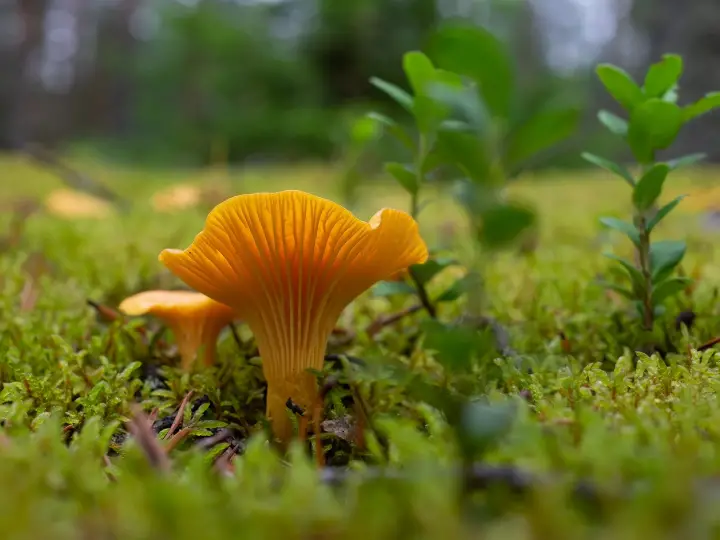
- Chanterelles: July-October (coniferous forests)
- Porcini: August-September (birch and pine forests)
- Various species: June-October
Important: Only harvest what you can identify with 100% certainty. Many accommodations offer guided foraging tours with local experts.
Day Trip
Options
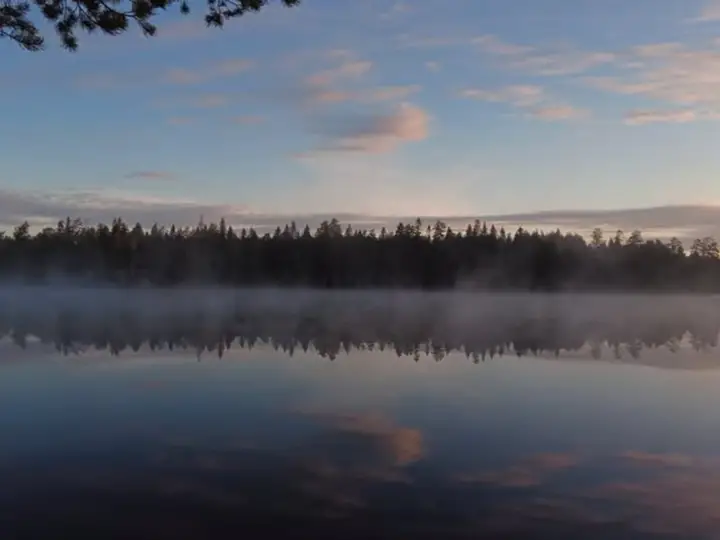
Kolovesi National Park (45 km)
While birders explore for avian targets, companions can enjoy stunning scenery, ancient rock paintings, and possible Saimaa Ringed Seal sightings during kayaking trips.
The pristine wilderness appeals even to non-birders.
Entry: Free | Facilities: Limited
This pristine national park protects critical Saimaa ringed seal habitat and offers excellent paddling through narrow channels and pristine lakes.
The park features ancient rock paintings and some of Finland’s most untouched wilderness.
Best Activities: Kayaking, hiking, wildlife photography Duration: Full day Bring: Lunch, water, camera with telephoto lens
Cities to Visit
Kuopio (80 km, 1.5 hours) Eastern Finland’s vibrant regional capital offers museums, shopping, excellent dining, and the famous Puijo Tower with panoramic views.
The market hall showcases regional foods including kalakukko (fish-filled rye bread).
Joensuu (65 km, 1 hour) University city with youthful energy, the North Karelia Museum, market square, and good restaurants.
The Botania botanical garden offers tropical escape during cooler weather.
Seasonal Highlights:
Year-Round Magic
Summer Magic (June-August)
The peak season brings midnight sun, warm swimming temperatures, and the famous Heinävesi Music Festival in July.
This intimate classical music festival takes place in the monastery grounds, offering concerts in truly unique settings.
All water activities are at their best, and the summer cafés create a festive atmosphere throughout the archipelago.
Festival Highlight: The outdoor concert on Midsummer Night, where classical music mingles with traditional Finnish Midsummer celebrations.
Autumn Glory (September-November)
Perhaps the most photogenic season, when the forests explode in colors ranging from golden yellow to deep crimson.
This is prime foraging season for mushrooms and berries, and hiking conditions are ideal with comfortable temperatures and fewer insects.
Early autumn can offer surprisingly warm weather perfect for one last kayaking adventure.
Special Experience: Guided mushroom foraging tours with local experts, followed by cooking classes using your finds.
Winter Wonderland (December-March)
While temperatures drop significantly, winter brings its own magic.
The archipelago becomes a cross-country skiing paradise, and Pääskyvuori Ski Resort provides downhill thrills.
The monasteries offer particularly atmospheric experiences during Orthodox Christmas celebrations in January.
Aurora Potential: Clear winter nights away from light pollution occasionally reward visitors with northern lights displays.
Spring Awakening (April-May)
The shoulder season offers excellent value and spectacular birdwatching as migrants return. Ice-out usually occurs in late April, signaling the return of water activities.
This is also when locals begin preparing their summer cottages, creating a sense of anticipation throughout the region.

Practical Information for Companions
Village Amenities Heinävesi village offers small-scale services: grocery stores, pharmacy, gas station, basic restaurants.
This isn’t a resort destination – prepare accordingly. The tranquil, authentic atmosphere appeals to those seeking escape from tourist crowds.
Mobile Coverage & WiFi Adequate in populated areas, enabling remote work or staying connected. Most accommodations provide WiFi.
Safety The region is exceptionally safe. Standard wilderness precautions apply when hiking or boating. Summer mosquitoes require insect repellent.
Winter demands proper cold-weather clothing.

Combining Birding & Non-Birding Activities
Morning/Afternoon Split: Birders can pursue dawn sessions while companions enjoy leisurely mornings, meeting for afternoon activities everyone appreciates – monastery visits, kayaking, sauna sessions.
Flexible Days: Build rest days into birding itineraries.
Everyone benefits from occasional non-field days exploring cultural sites or simply relaxing by the lake.
Shared Meals: The monastery restaurant and local cafés provide gathering points where birders can share the day’s highlights while companions contribute their discoveries.
Photography Opportunities: The stunning landscapes, unique cultural sites, and excellent wildlife (seals, occasionally moose) provide photography subjects beyond birds for creative companions.

Sample Itineraries
Weekend Birding Blitz (2 Days)
Day 1:
- 4:30 AM: Dawn start at Kermaranta Marina, kayak/boat through archipelago for waterfowl, loons, Osprey (4 hours)
- 9:00 AM: Return for breakfast
- 10:30 AM: Karvio Canal wetlands for waders and waterbirds (2 hours)
- 1:00 PM: Lunch at monastery café
- 2:30 PM: Forest roads search for woodpeckers and game birds (3 hours)
- 6:00 PM: Valamo grounds evening circuit for edge species (1.5 hours)
- Evening: Dinner, log species, prepare for Day 2 Expected species: 60-80 in May
Day 2:
- 5:00 AM: Return to best sites from Day 1 for missed species
- 9:00 AM: Breakfast
- 10:30 AM: Drive to Kolovesi National Park (45 minutes)
- 11:30 AM: Nahkiaissalo trail for forest specialists (2-3 hours)
- 2:30 PM: Kolovesi waters paddle for raptors and waterfowl (2-3 hours)
- 6:00 PM: Return to accommodation Expected additional species: 20-30
Weekend total: 80-100+ species possible May-early June

Comprehensive Week (7 Days)
Day 1 (Arrival): Settle into accommodation, afternoon monastery grounds birding, evening planning for week ahead
Day 2: Full day Kermajärvi exploration – dawn paddle, mid-morning land-based scanning, afternoon forest trails
Day 3: Kolovesi National Park day trip – hiking and paddling combining, focusing forest and water birds
Day 4: Wetland and wader focus – Karvio Canal and all accessible marshy areas, afternoon forest roads for owls/woodpeckers
Day 5: Dawn gambird search, midday rest/monastery visits (companions enjoy cultural sites), evening return to productive spots
Day 6: Return to best locations from previous days, target any missed priority species, photography opportunities
Day 7: Morning final survey of favorite spots, depart mid-afternoon
Week total: 120-150+ species possible May-June, including most regional specialties
Spring Migration Special (10 Days)
Extend the 7-day itinerary with:
Day 8-10: Expand radius to include repeated visits to Kolovesi, explore additional forest roads, visit nearby wetlands in adjoining municipalities, dedicate time to photographing best finds, allow for weather-dependent adjustments.
10-day total: 140-170+ species possible with ideal conditions and timing (May 10-25 optimal)
Month-by-Month Birding Summary
January-February: Quiet months, 30-40 species possible. Forest specialists, winter finches, hardy waterfowl in ice-free water.
Excellent for owls in mild winters. Challenging conditions, short days. For hardy birders only.
March: Spring awakens. 50-65 species. Owl calling peaks, early migrants arrive, Whooper Swans return. Increasingly favorable weather.
Game bird lekking begins late month. Still cold (-5 to +5°C).
April: Migration intensifies. 70-90 species. Waterfowl flood through, waders begin arriving, forest birds return.
Ice-out triggers activity explosion. Variable weather (0-15°C). Excellent diversity.
May: Peak month. 100-130+ species. Everything present, breeding activity maximal, migration continues.
Long days enable extended birding. The month to visit if you have only one choice. Temperatures 8-20°C. Possible mosquitoes late month.
June: Breeding focus. 90-110 species. Diversity decreases but behavioral observations excel. Young birds appear.
Forest specialists active. Mosquitoes peak. Temperatures 15-25°C.
July: Post-breeding. 70-90 species. Wader passage begins. Many birds quieter. Pleasant weather (18-25°C) but intense mosquitoes early month. Good for photography with longer-staying light.
August: Autumn movement. 80-100 species. Wader passage continues, juvenile plumages, first waterfowl arrivals. Increasingly pleasant conditions (12-20°C). Fewer insects. Good for less-experienced birders.
September: Main autumn migration. 90-110 species. Waterfowl numbers build, wader passage continues, possible rarities. Forest colors spectacular.
Temperatures 5-15°C. Excellent photography light.
October: Late autumn. 60-80 species. Hardy species remain, waterfowl concentrations, forest finches possible.
Increasingly cold and wet (0-10°C). Requires proper gear but can be productive.
November-December: Winter sets in. 35-50 species. Forest specialists, winter finches, limited waterfowl.
Very short days (5-7 hours). Cold (-5 to -15°C). Atmospheric but challenging.
Conservation & Local Birding Community
BirdLife Finland (www.birdlife.fi) coordinates conservation efforts and maintains the national rarity committee.
The organization’s Oriolus Southern Savo branch (www.oriolus.fi) focuses on regional ornithology and can provide local contacts.
Key Conservation Challenges:
- Saimaa Ringed Seal protection (critically endangered, ~400 individuals)
- Old-growth forest preservation for specialist species
- Climate change impacts on breeding phenology
- Recreational pressure management in sensitive areas
How to Help:
- Submit observations to eBird and Finnish Biodiversity Information Facility (laji.fi)
- Support BirdLife Finland and local conservation organizations
- Practice ethical birding and encourage others to do so
- Report rarities to appropriate authorities
- Respect protected area regulations
Resources & Contacts
Tourist Information: Heinävesi Tourist Information: +358 17 575 288
Emergency Services: Universal Emergency Number: 112
Birding Resources:
- BirdLife Finland: www.birdlife.fi
- Finnish Biodiversity Information Facility: laji.fi
- eBird Hotspots: ebird.org (search “Heinävesi”)
- Birdingplaces.eu (site-specific information)
Guided Tours:
- Finnature: www.finnature.fi, +358 13 687 299
- Contact local guides through Oriolus or BirdLife Finland
Accommodation Contacts:
- Valamo Monastery: +358 17 570 111, [email protected]
- Tourist office can provide additional options
Weather Forecasts: Finnish Meteorological Institute: en.ilmatieteenlaitos.fi

Photography Tips
Best Light: Golden hours (dawn and dusk) offer warmest light, though May-June’s extended twilight provides quality light throughout morning and evening. Overcast days create excellent even lighting for forest photography.
Equipment: 400-600mm telephoto essential for waterfowl. Consider crop-sensor cameras for extra reach. Waterproof protection critical for boat/kayak work. Bring bean bags for shooting from boats.
Signature Shots:
- Black-throated Loons on misty morning waters
- Ospreys with fish against blue sky
- Whooper Swans on ice-fringed waters (April)
- Orthodox monastery with Lake Juojärvi backdrop
- Forest woodpeckers at work
- Autumn reflections with migrating waterfowl
Challenges: Water-based subjects require excellent technique for sharp images from unstable platforms.
Forest birds in dim light demand high ISO capability and stabilization.
Ethics: Never flush nesting birds for photos.
Maintain distances that don’t alter behavior.
Avoid baiting or playback near nests.
Heinävesi represents Finnish birding at its most rewarding – exceptional diversity, stunning landscapes, accessible wilderness, and the peaceful integration of culture and nature that makes Finland special.
Whether you’re targeting specific eastern specialties, building a solid European list, or simply seeking to experience the magic of the boreal summer, Heinävesi delivers experiences that will draw you back season after season.
The region’s compact size means you can reasonably cover primary sites in a long weekend, yet the depth of habitat and seasonal variations support weeks of productive birding.
Combined with accommodating infrastructure, fascinating cultural elements, and activities for non-birding companions, Heinävesi deserves recognition as one of Finland’s premier birdwatching destinations.
So pack your binoculars, prepare for long days in the field, and discover why discerning birders consider Heinävesi among Eastern Finland’s best-kept secrets.
The loons are calling.